Area of Expertise
Multiple Sclerosis (MS)
Multiple sclerosis (MS) is a chronic disease that affects the central nervous system. Early diagnosis and regular follow-up play an important role in preserving quality of life.
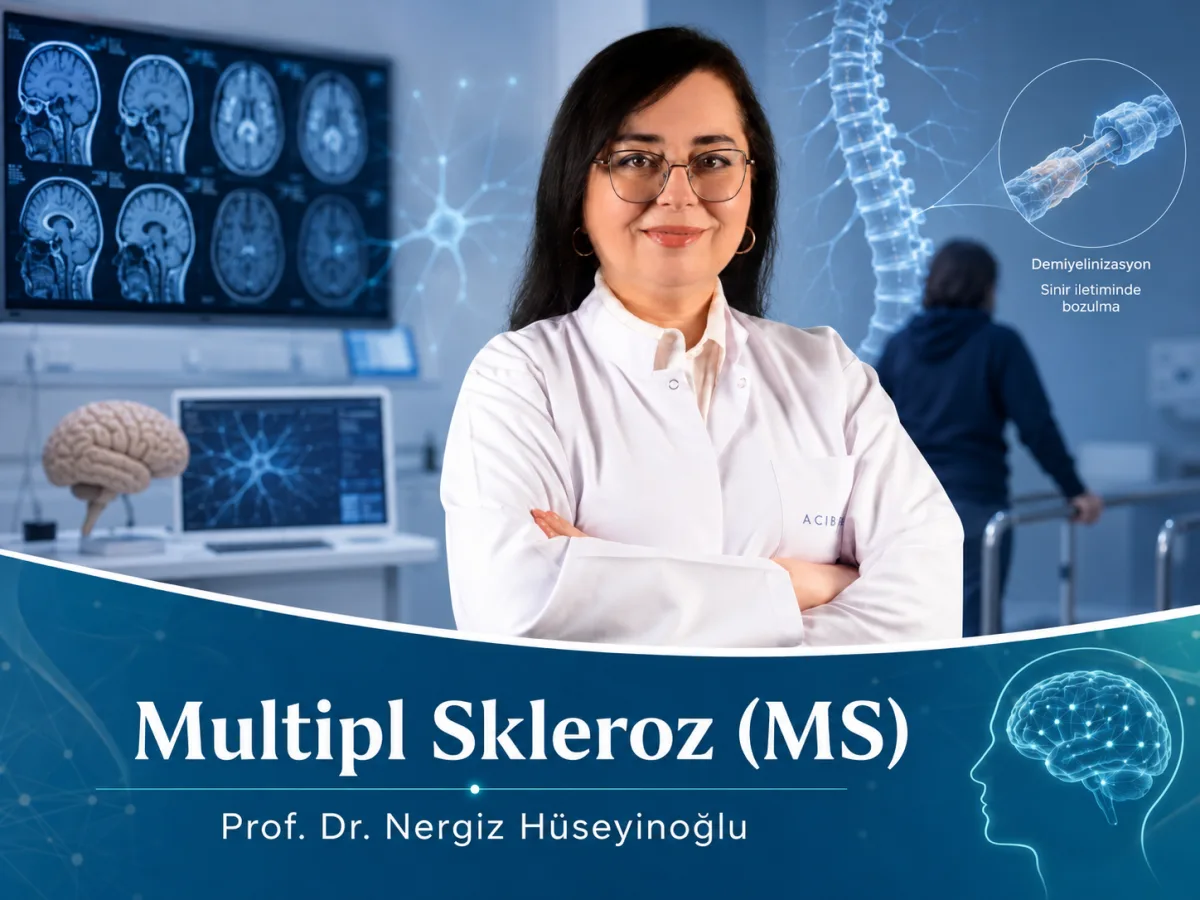
Multiple sclerosis (MS) is a chronic disease that affects the central nervous system. Early diagnosis and regular follow-up play an important role in preserving quality of life.
MS is a disease that arises when the immune system damages the sheath (myelin) surrounding the nerve fibers. By affecting nerve conduction in the brain and spinal cord, it can lead to a range of symptoms. Its course varies from person to person.
A neurological evaluation is important when symptoms such as unexplained vision loss, one-sided weakness or numbness, or balance problems develop within days. Early diagnosis makes follow-up easier.
Diagnosis uses a neurological examination, MRI of the brain and spinal cord and, when needed, additional tests. The course of the symptoms over time is assessed.
In MS management, the goal is to bring attacks under control and preserve quality of life. Current treatment options and regular follow-up are planned individually. Decisions are made together.
This content is for general information only and does not replace medical advice, diagnosis or treatment. Please consult a physician regarding your symptoms.
Contact us for a scientific and ethical evaluation of your neurological concerns.